Logixboard
Founding designer who built the design org from 0→8 designers and shipped the product through $1M ARR and Series B.
Context
I joined Logixboard in December 2019 as the founding designer when the company was around 10 people. I was looking for a company with significant upside, led by underrepresented founders in tech, at a moment when I anticipated market volatility ahead.
Logixboard was building a customer experience platform for freight forwarders—companies that move goods around the world. The existing software in this space was decades old, and shippers had limited visibility into where their cargo was or when it would arrive.
The Problem
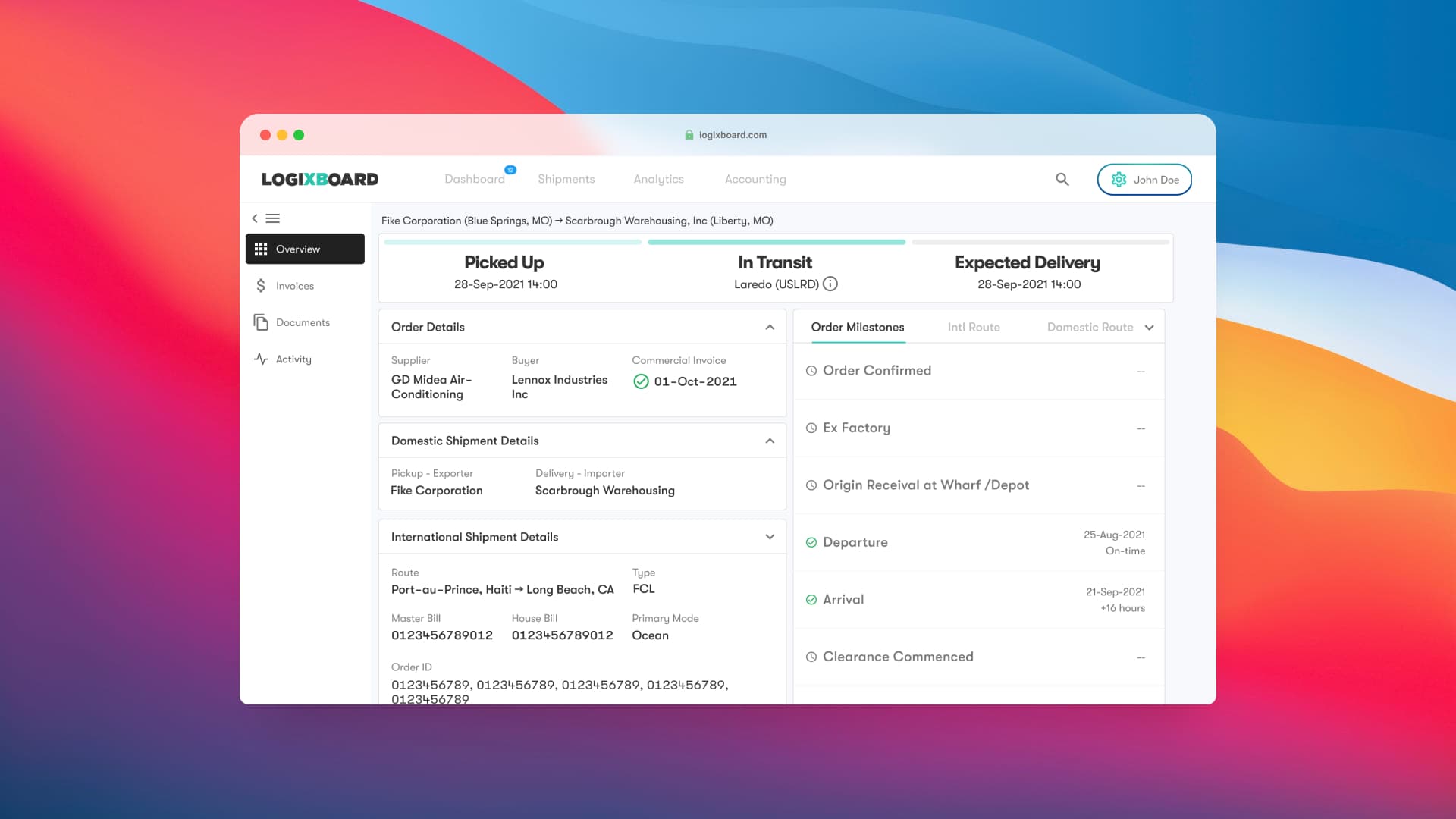
The core challenge was representing the shipment lifecycle clearly. A single shipment might involve ocean freight, trucking, customs clearance, and warehouse operations—each with different statuses, documents, and stakeholders.
Foundational UX
Early on, I focused on establishing a clear structure for the shipment lifecycle. I broke it down into three phases—Planning, Active Shipments, and Post-delivery—that mapped to how shippers actually thought about their cargo.
Design System Evolution
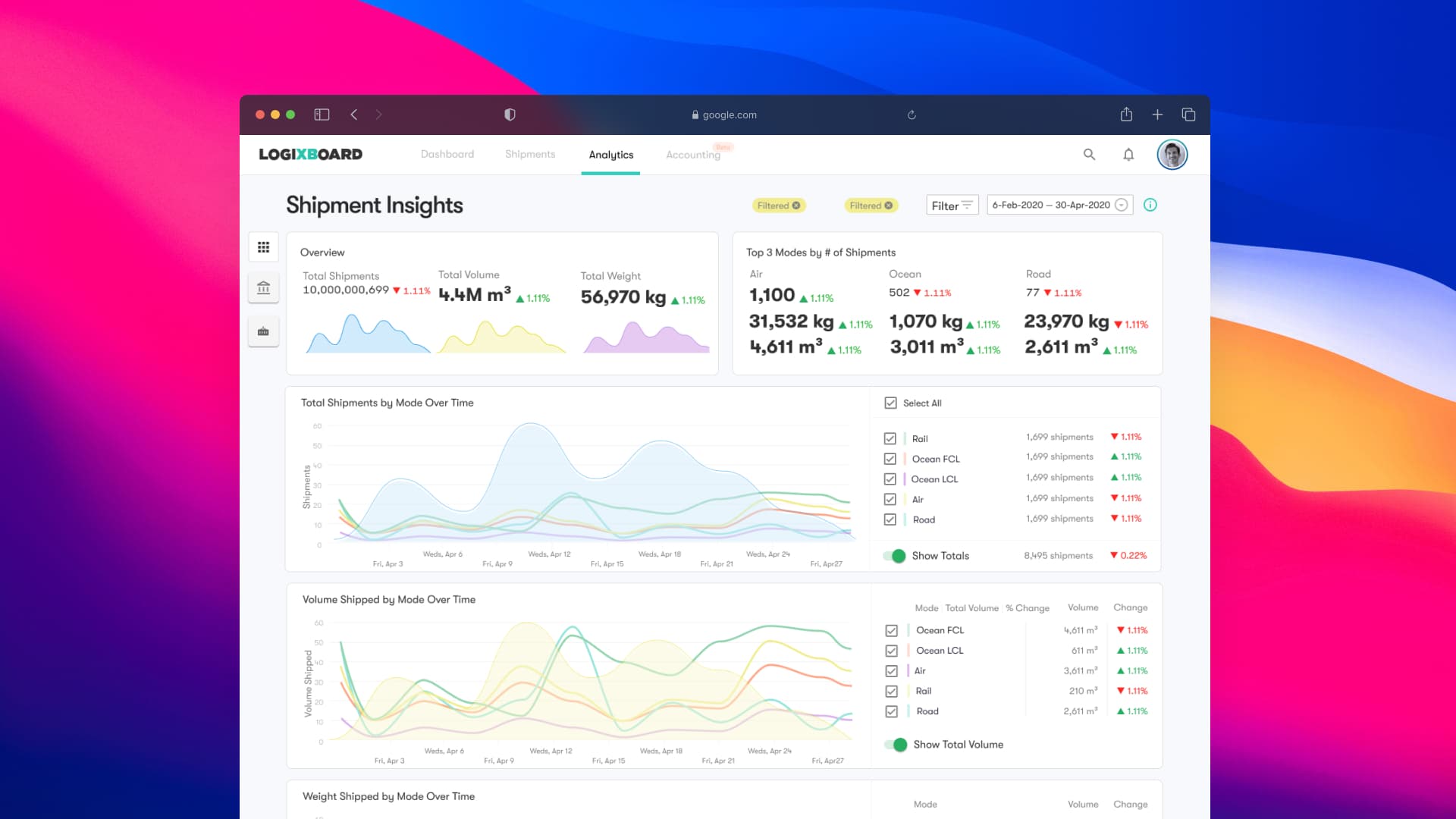
I inherited some foundational work from a contract designer and built on it—introducing GT Walsheim as the UI typeface to give the product a more distinctive feel, establishing a type ramp, and developing color palettes for both UI and brand.
Brand Development
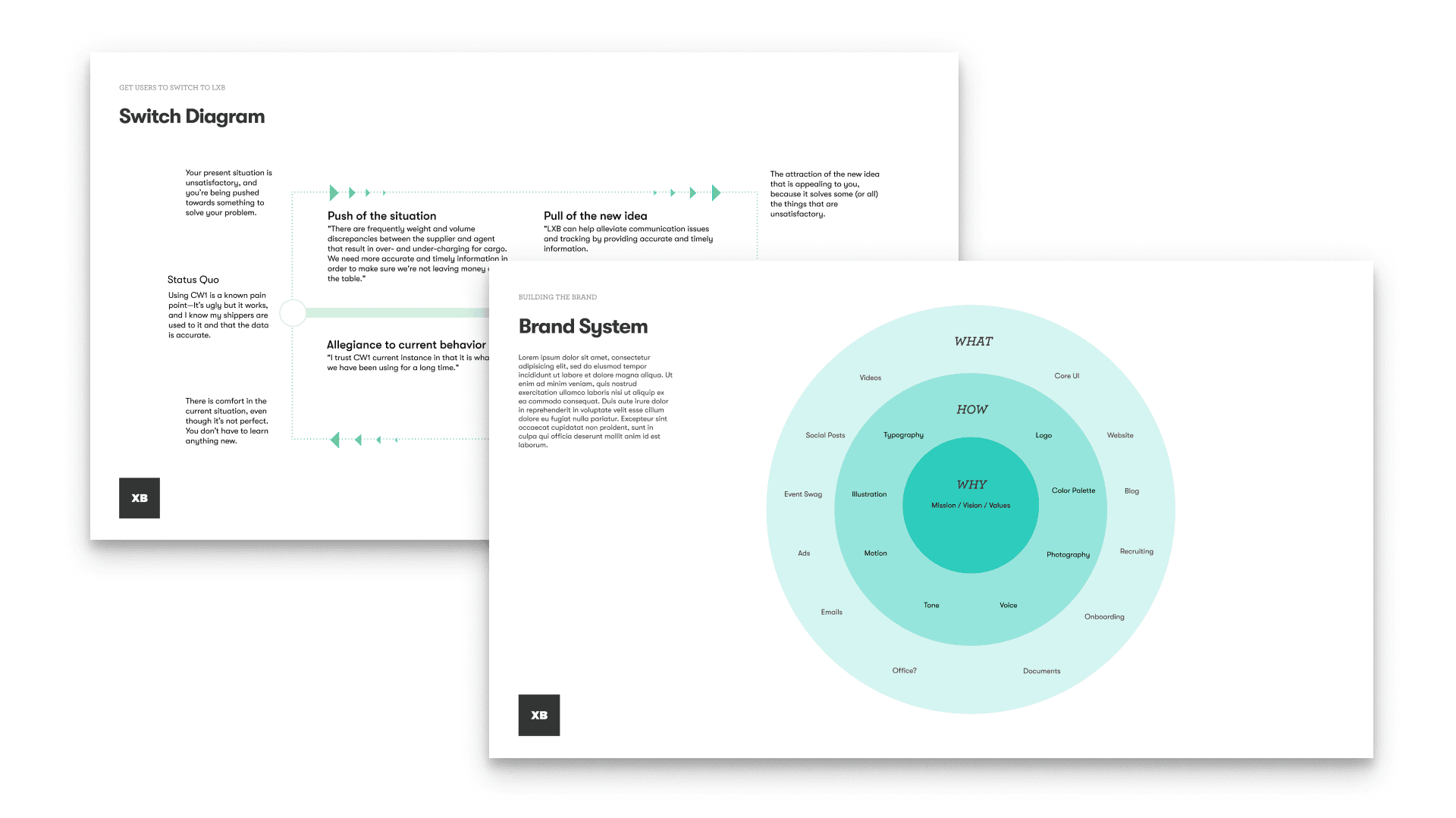
At early-stage startups, I find it valuable to put guidelines around what the brand means and how it can create shortcuts for product decisions. I developed Switch Diagrams—visual frameworks that codify why someone would switch to Logixboard from their current solution.
Scaling the Team
As the company grew, I built the design team from just me to 8 designers. This meant developing hiring processes, performance profiles, onboarding programs, and design critique rituals that would help the team maintain quality as we scaled.
Outcomes
Product: Shipped the core platform from early MVP to a mature product that helped Logixboard reach $1M ARR and raise Series B funding.
Team: Built a design org of 8 people with clear career paths, strong critique culture, and effective collaboration with engineering and product.
Systems: Established design foundations—type, color, spacing, components—that enabled the team to ship faster without sacrificing consistency.
Reflection
Logixboard taught me how to balance building product with building an organization. The hardest part wasn't the design work—it was creating the conditions where a growing team could do their best work while maintaining the velocity and quality the business needed.