Andesite.ai
Sole designer building a design system that enabled a 20+ person engineering team to ship consistent, accessible UI without dedicated frontend resources.
Context
Andesite builds AI-powered tools for cybersecurity analysts—helping them investigate threats, triage alerts, and share knowledge across their organizations. I joined as the only designer on a team with limited frontend experience and no dedicated frontend developers until my last two months.
The challenge: build a design system from scratch that could scale with a fast-moving product while enabling engineers to ship polished UI quickly.
The Problem
Analysts need to move fast while maintaining high confidence in their decisions. The UI needed to surface complex information clearly, support rapid triage, and build trust in AI-generated insights—all while being accessible to analysts with varying levels of experience.
Tokens-First Architecture
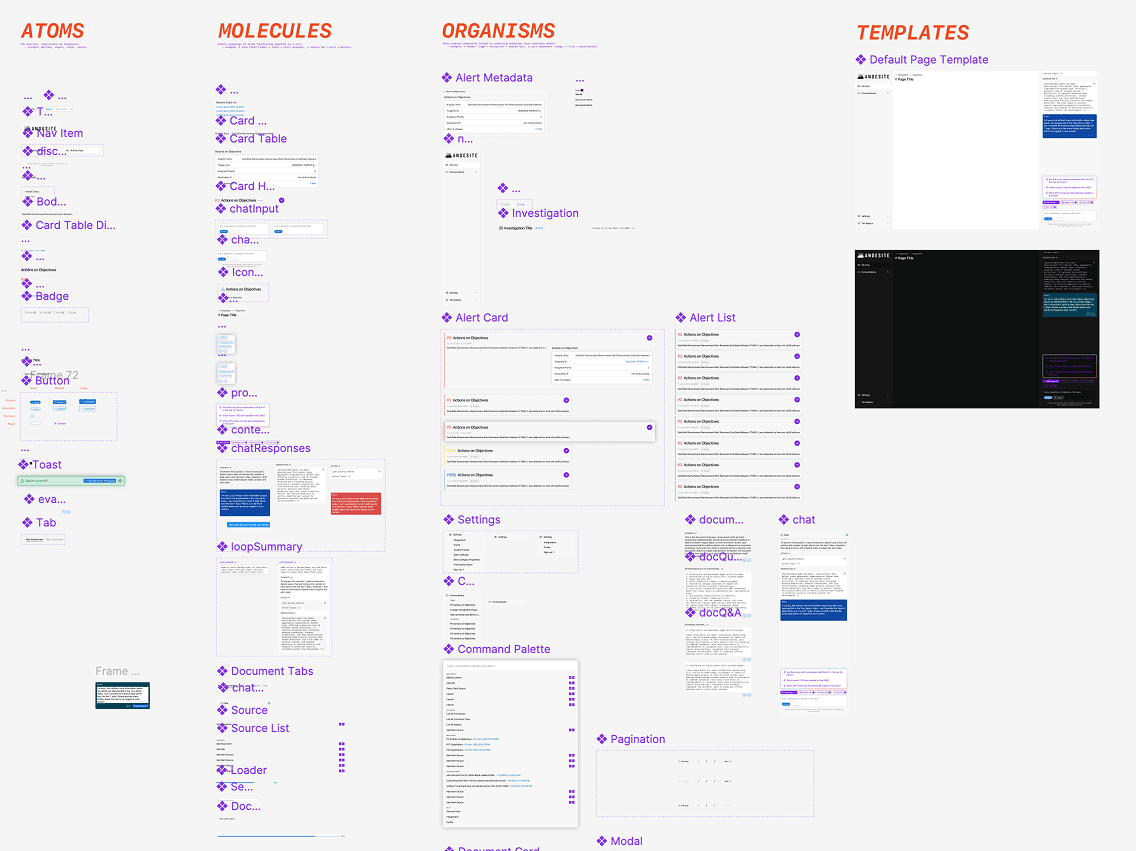
I started with semantic and system tokens—color, typography, spacing, radii, elevation—creating a shared vocabulary between design and engineering. This token-first approach meant global changes could cascade through the entire system safely.
Storybook as Source of Truth
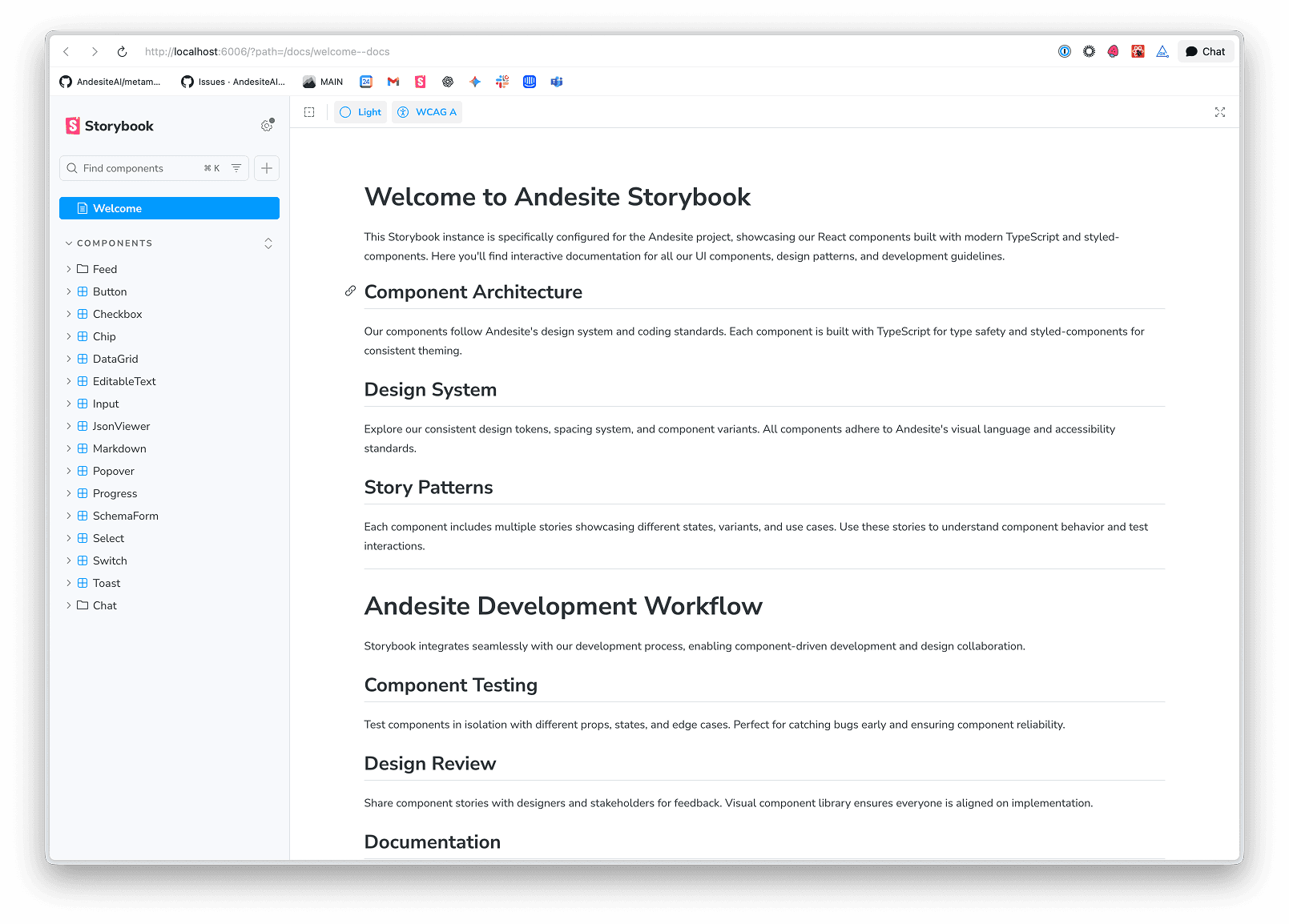
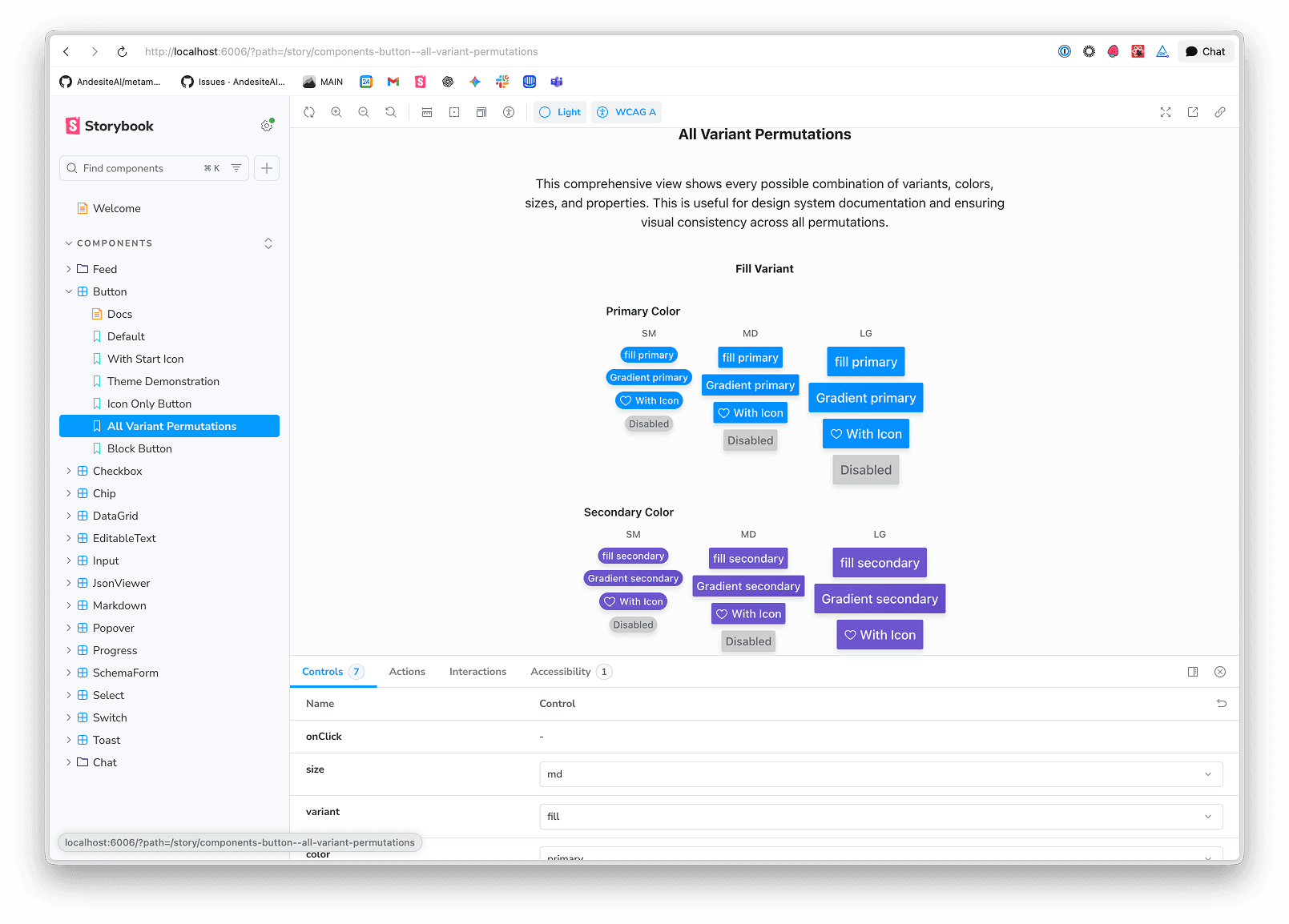
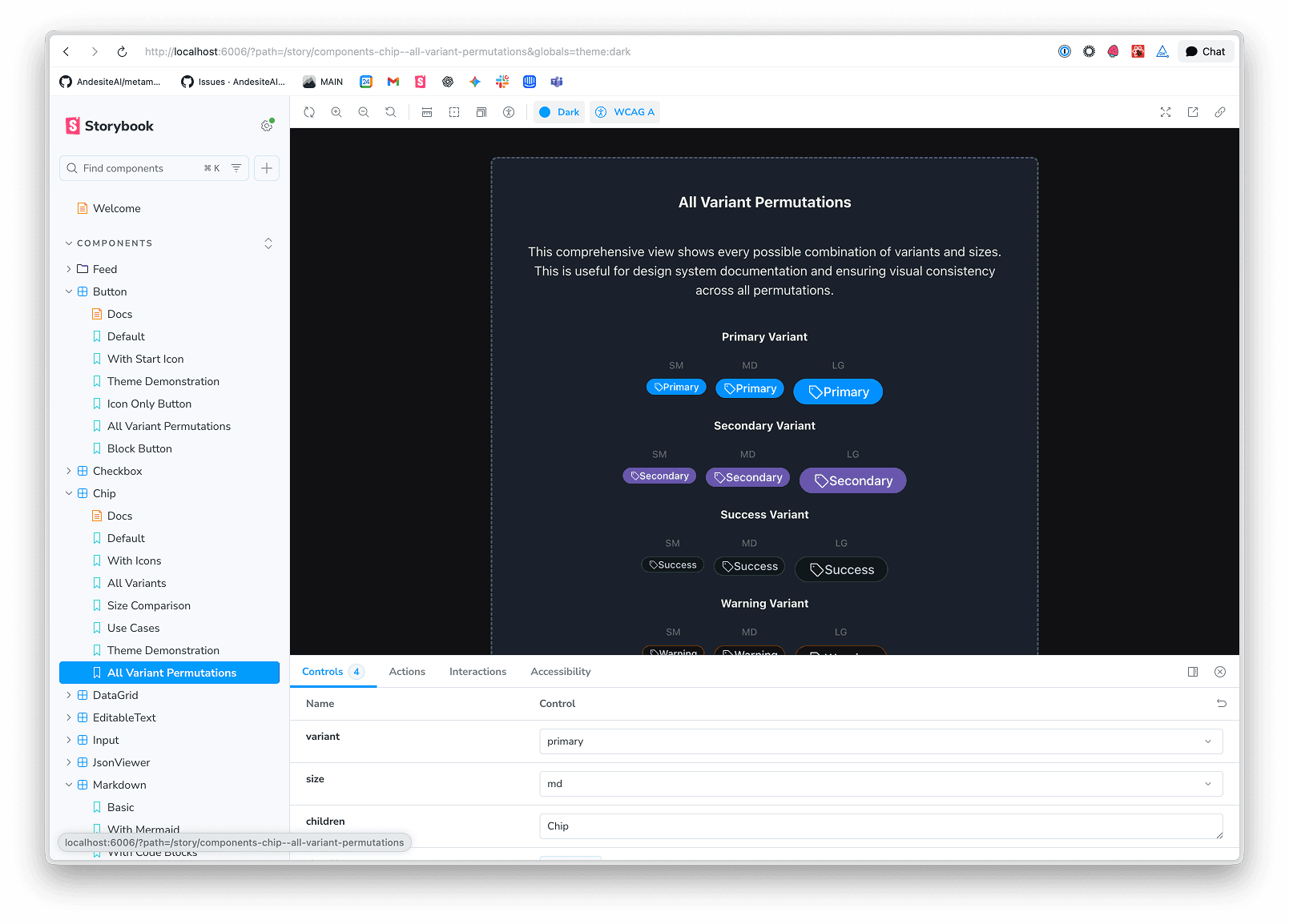
I moved from MUI to a Radix-based component library and made Storybook the interactive source of truth. Every component had documented props, usage guidelines, variant matrices, and live examples.
AI-Powered Analyst Workflows
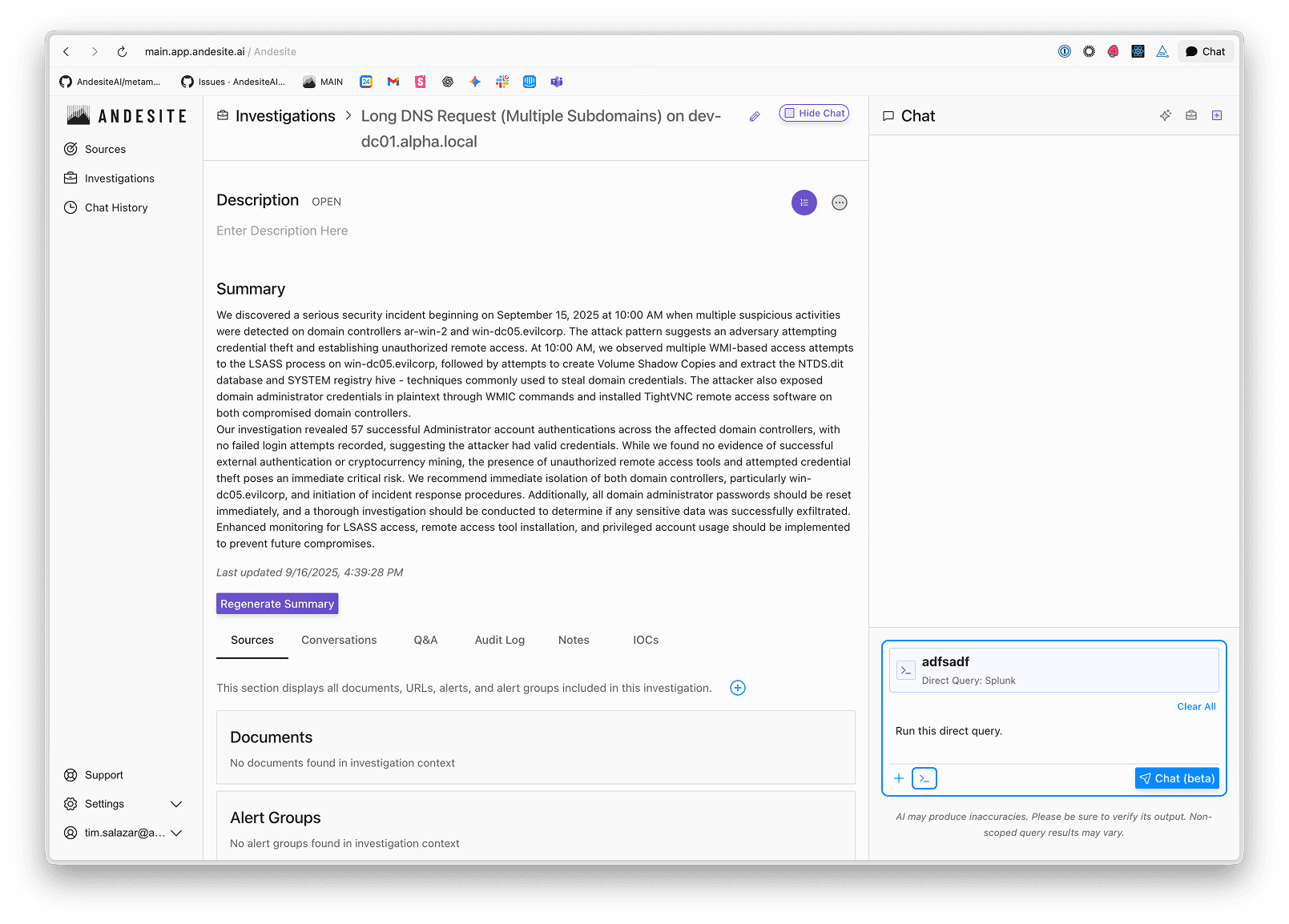
In parallel with the design system, I designed AI workflows for cyber analysts—prioritizing clarity, trust, and speed. The key insight: AI should level up Tier 1 analysts by giving them access to the tradecraft of experienced threat hunters.
Integration Management
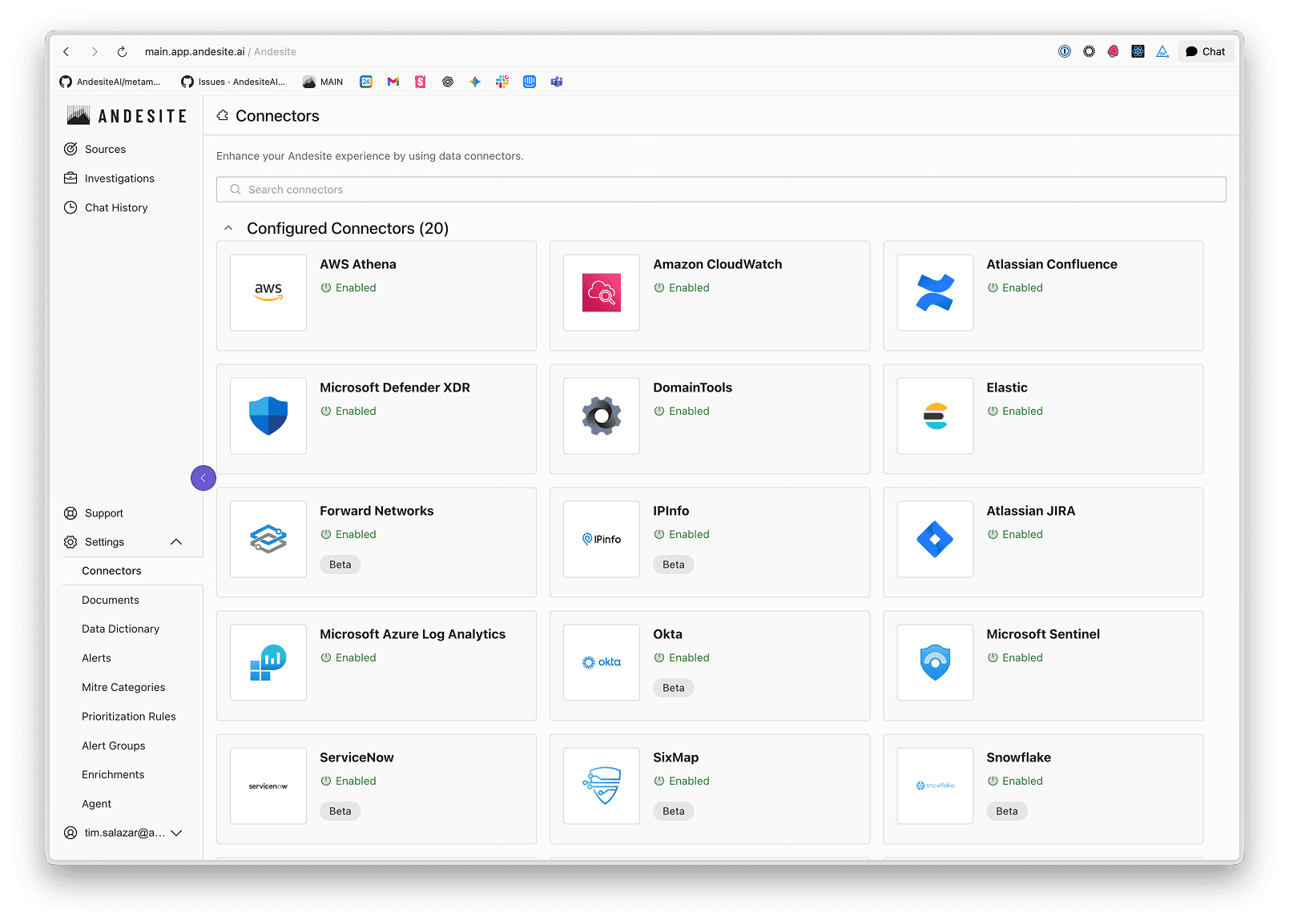
Analysts work with dozens of security tools—XDR/EDR, IAM, ITSM, cloud telemetry. I designed connectors that organized integrations by category and made it easy to assess coverage across the environment.
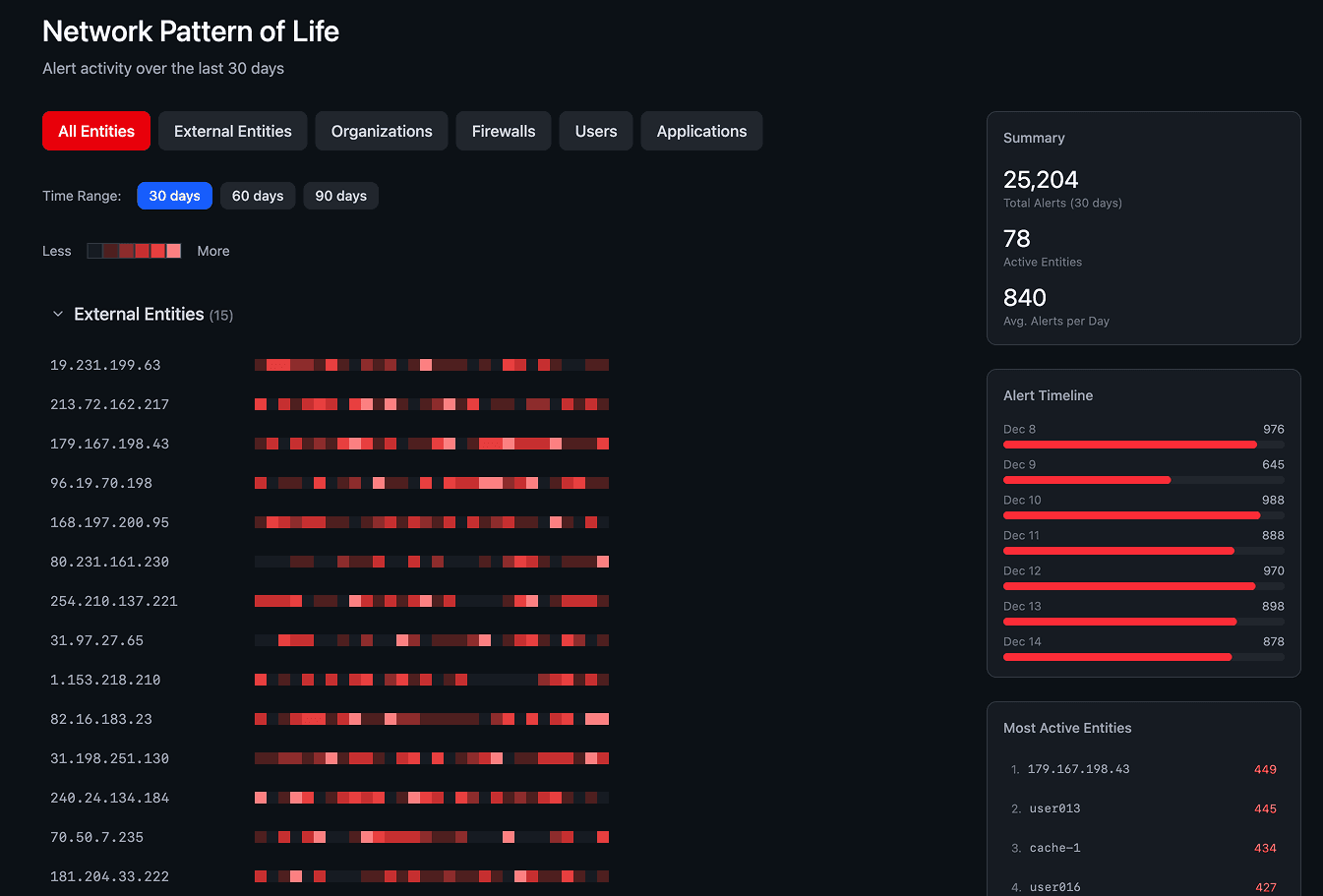
Pattern-of-Life Visualization
Code Contributions
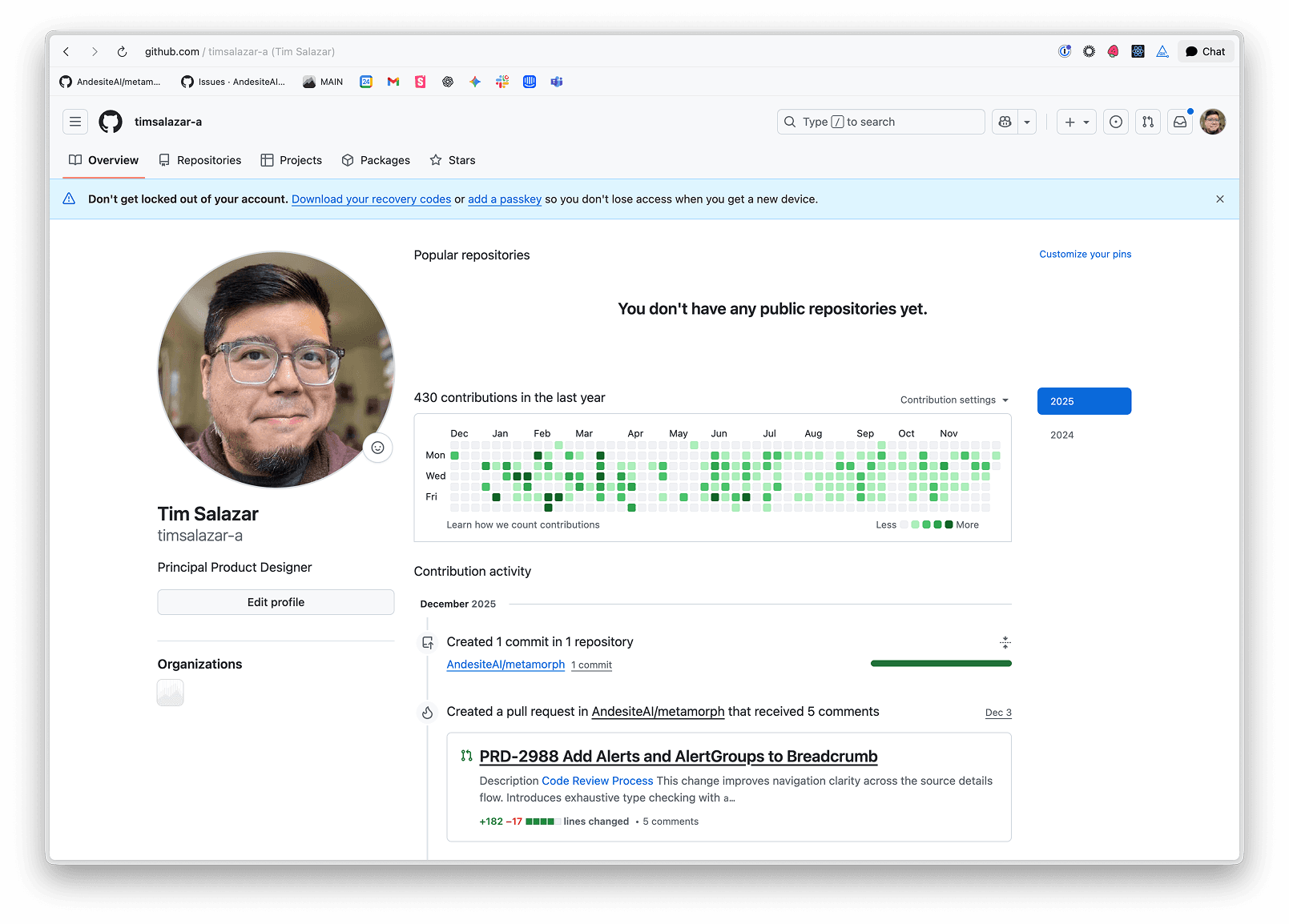
I contributed directly to the frontend codebase—shipping Storybook components and production code. The system wasn't just designed; it was proven in product.
Outcomes
System adoption: The design system became the default for all new UI work. Engineers could ship consistent, accessible components without design review for standard patterns.
Velocity: Component-based development in Storybook accelerated iteration. Engineers spent less time on UI decisions and more time on product logic.
Quality: Consistent tokens and documented components reduced visual drift and accessibility issues across the product.
Reflection
Being the sole designer with direct code contribution access gave me the freedom to move fast, but it also meant making tradeoffs constantly. I learned to prioritize ruthlessly—building the components that would have the highest leverage first, and documenting decisions so the system could evolve without me.